
⭐️⭐️⭐️⭐️
Tony Roper’s classic play might be approaching 40 years old, but this lovingly revived production, directed by the man who wrote it, proves that its timeless script remains as sharp, funny and relevant as ever.
Famously rejected by producers who complained that ‘nothing happens’, The Steamie delights precisely because of its apparent mundanity. Roper’s razor-sharp ear for everyday conversation captures the gossip, humour, frustrations and friendships of working-class women whose lives revolved around the communal washhouse.
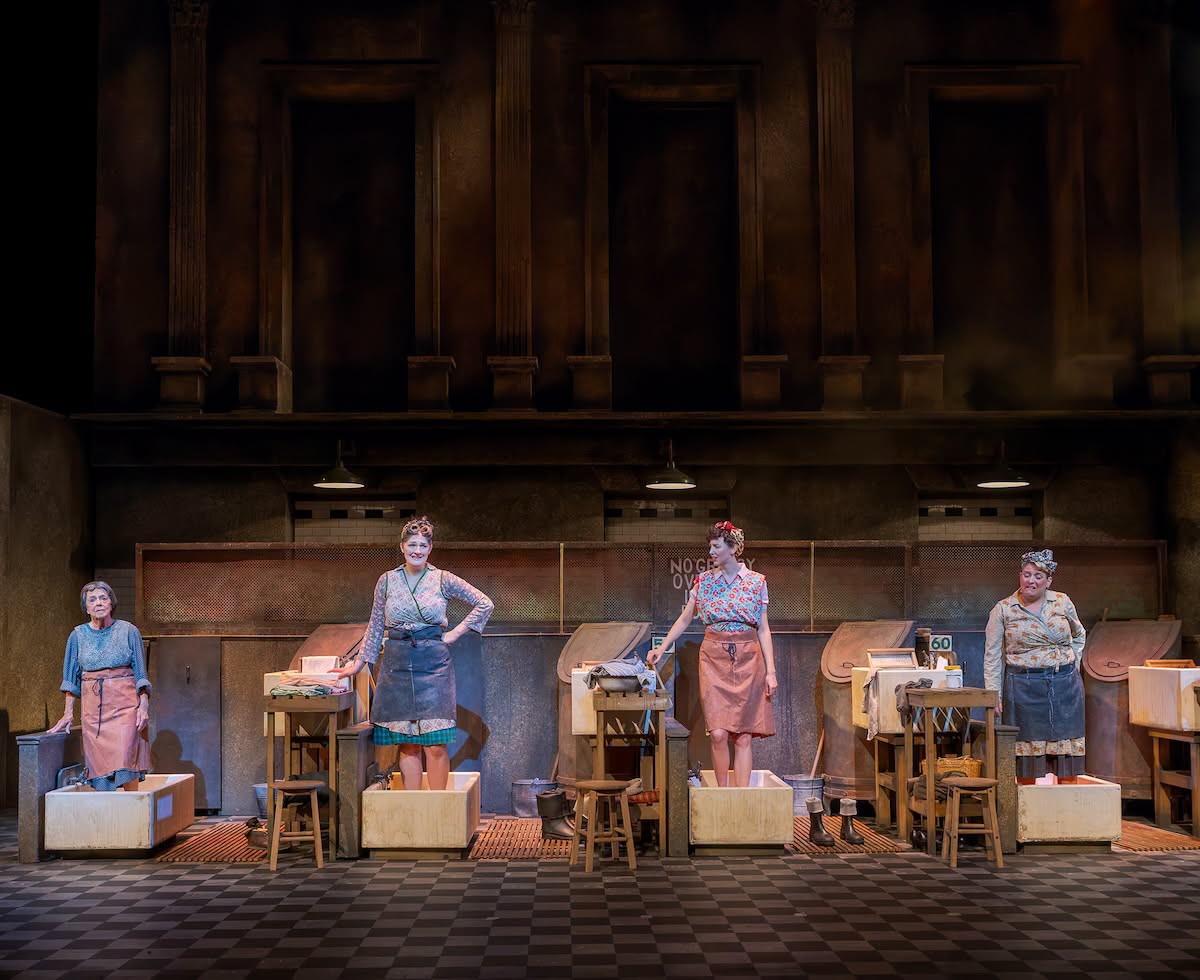
Set in a Glasgow steamie on Hogmanay in the 1950s, the play was once a commentary on a disappearing way of life, as communal washhouses gave way to new-fangled inventions like electric twin tubs and laundrettes. Today, it feels more like a celebration of the communities and connections that were lost along the way.
And therein lies the genius of Roper’s writing. Beneath the seemingly trivial chatter about washing, husbands and neighbours lies something far more substantial. These are women with dreams, disappointments and ambitions, whose humour often disguises the hardships of everyday life.
Louise McCarthy dazzles as her brilliantly brash self in the role of Dolly, the undisputed comedic powerhouse of Roper’s script. With impeccable timing and an infectious energy, she commands the stage, delivering some of the evening’s biggest laughs while ensuring there is warmth beneath the character’s larger-than-life personality.
Eden Barrie is equally delightful as the youthful Doreen, whose optimism and aspirations offer a charming contrast to the more world-weary women around her. Lesley Mackie, meanwhile, is a joy as Mrs Culfeathers, bringing both tenderness and tremendous comic ability to the oldest of the steamie women. Ali Cleland provides a wonderfully grounded counterbalance as the sharp-tongued Magrit, completing a formidable ensemble.
If there is a criticism, it is that the production occasionally strays too close to pantomime. The heightened performances and exaggerated comedy sometimes threaten to overwhelm the beautifully observed reality of Roper’s writing. It’s a script that needs little embellishment, and some of its strongest moments come when the cast simply allow the words to do the work.
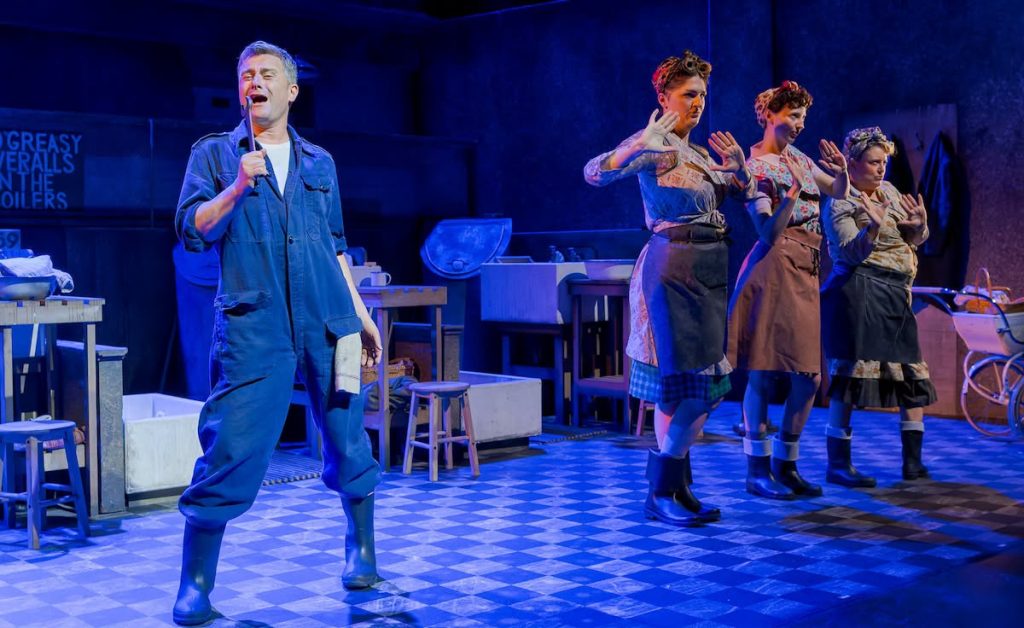
The only real excess comes in the form of Dave Anderson’s songs. While undoubtedly familiar to audiences, they feel superfluous to the otherwise muted drama, interrupting the natural flow of conversation and, at times, drawing attention away from the emotional substance of the play.
Yet these are relatively minor frustrations in a production that has so much going for it.
What makes The Steamie endure is not simply its comedy, but its humanity. There is something deeply moving about watching these women find joy, solidarity and companionship in the most ordinary of circumstances. Almost four decades after its premiere, the play’s reflections on friendship, community and social change feel as pertinent as ever.
Roper has created something rather special in The Steamie: a play in which, on the surface, very little happens, but beneath it all, everything that matters in life is happening.
It is a wonderfully funny, affectionate and occasionally poignant revival of one of Scotland’s greatest theatrical treasures.
The Steamie plays Dundee Rep from 27 August to 12 September 2026, before embarking on a Scottish tour.


